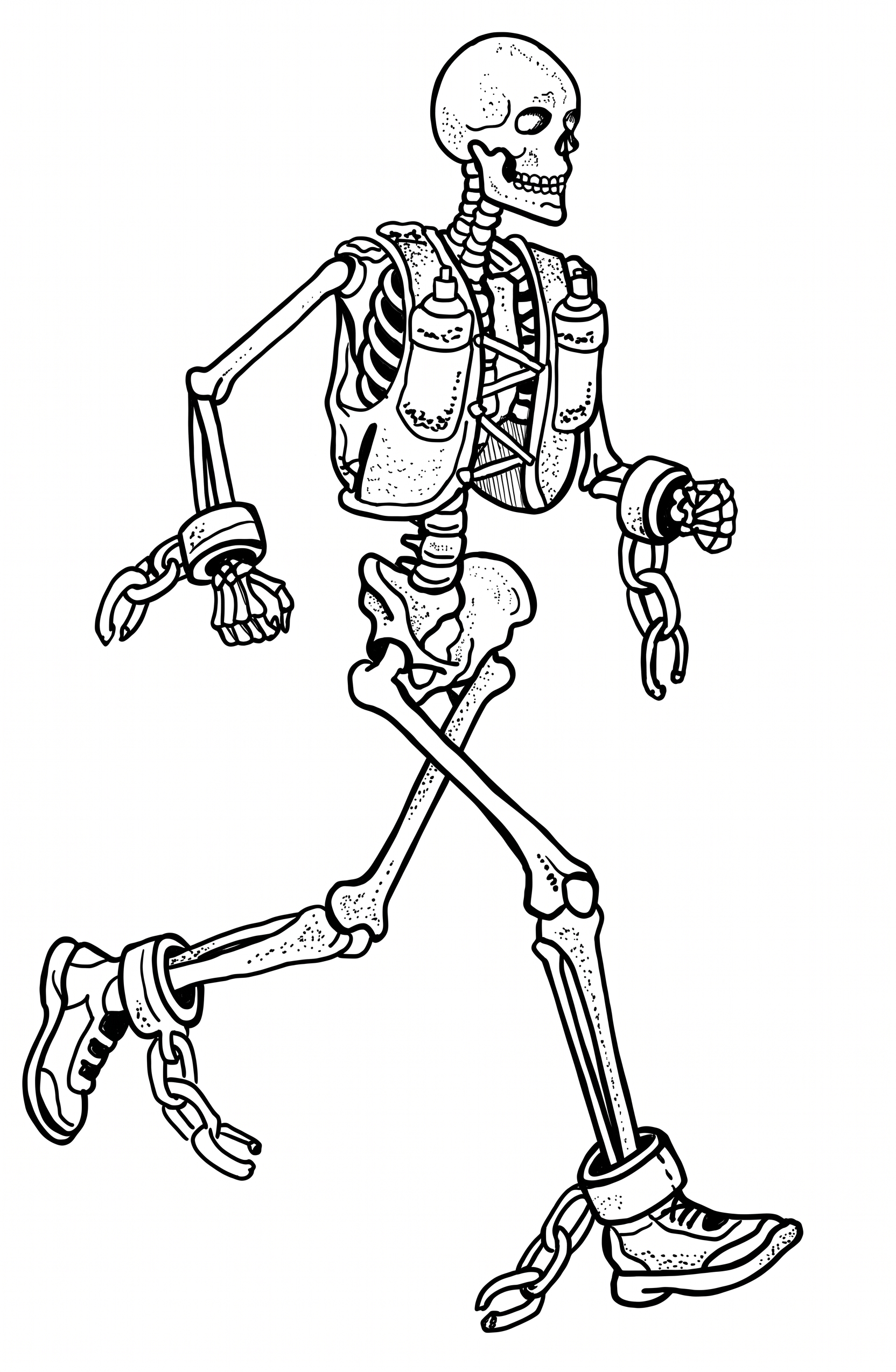
It takes about three weeks for my brain to completely overwrite the memory of kilometre 34.
Up until that point, the deterrent is purely physical. The kit stays at the bottom of the wash basket. My shoes sit by the back door under a crust of dried clay I can’t be bothered to brush off. I tackle stairs one stiff leg at a time, and my Garmin sits on the table offering a string of low numbers that suggest immediate retirement.

During that first fortnight, the idea of doing it again feels ridiculous. I tell myself, usually over a large bowl of Granola and yogurt, that structured training is done with for a while. The plan is simple: pottering through the woods on a Sunday morning with the dogs, ignoring pace, elevation, and carbohydrate targets. Just running because the weather is decent. Total freedom.
Then the legs stop aching.
The Problem with Freedom
Running without a plan sounds grand until I actually close the door behind me. There is no session to tick off. No heart-rate cap to police, no climb to hunt down, and no timer telling me when to force down more sugar. I drift along a bridleway, take a left because it looks flat, and realise I am entirely adrift after 6 or 7 kilometres. The watch buzzes for a split I don’t care about. The dogs look back through the mud wondering why the pace has gone completely slack.
By week 4, the quiet starts to grate.
It begins innocently. A half-hearted browse on the laptop after dinner. Not entering anything, just having a look to see what the calendar looks like.
This is where the amnesia becomes expensive. Looking at spring race profiles in late autumn is dangerous work. In October, everything on a screen looks civilised, romantic, and manageable.
Three Flavours of Bad Judgment
First is the local lowland event in late March. The logistics make complete sense. No hotels, forty minutes in the car, back home by mid-afternoon. The race website talks about scenic rural bridleways and gentle rolling farmland across 50 kilometres. The reality of that ground in March is ankle-deep, unploughed Wealden clay designed to pull shoes straight off my feet. I am effectively paying £60 quid to slide backward down a field in sleet.
Then there is the early-season hill route. Another 50 kilometres except this time along an exposed chalk ridge in April. The gallery photos were clearly taken during an anomalous heatwave four years ago, showing dry flint and sunlit horizons. It conveniently leaves out the fact that the wind off the coast in early spring will strip the skin off my face, leaving me trying to unwrap a squashed bar with fingers that stopped working fifteen kilometres earlier.
Finally, the sensible training run.
This is the 30 kilometre event entered under the banner of preparation. A catered long run, strictly non-competitive, purely to test kit and get time on feet without pressure.
That lie rarely survives registration. The moment I pin a Tyvek number to my chest in a cold village hall smelling of Deep Heat and damp waterproofs, the calm approach disappears. I will inevitably spend the final 10 kilometres trying to break the will of a stranger in an ancient fleece hat who breathes like a tractor.
Yet my cursor stays hovering over the submit button. The slump after an event is rarely about tired legs. It is about the lack of an anchor. The dark, wet 15 kilometre loops coming in December and January are difficult to justify when they lead nowhere. Dragging myself down a flooded lane before work is an act of pure stubbornness unless there is a fixed date waiting in the spring to keep me honest.
…and thus the form is waiting for card details. Common sense is standing by the door, knowing full well it has already lost.
Leave a Reply